Why reflective targets matter in 3D scanning
- Dec 18, 2025
- 1 min read
Written by Drawbridge Team
Reflective targets aren't just stickers, they're the key to HandySCAN's world-class accuracy and flexibility.
Here's why they're the essentials in many scanning workflows.

1. They Provide Spatial Awareness
Reflective targets allow the scanner to recognize its position in 3D space during the scanning process.
They act like reference points, letting the system continuously calculate its movement and orientation with precision.
2. They Maintain Accuracy Over Larger Surfaces
When scanning larger or more complex parts, accuracy can drift if there’s no reference frame.
Targets provide a consistent coordinate system, ensuring the scan remains dimensionally accurate throughout, even if you pause or shift angles.
3. They Enable Flexibility in Scanning
With targets, you can move the part or the scanner freely during scanning.
This is ideal for field scanning, scanning in tight spaces, or when the object can’t remain stationary. The software keeps everything aligned automatically.
4. Do You Always Need Targets?
Not always. HandySCAN uses targets for optimal accuracy, especially for metrology and inspection tasks.
However, there are 3D scanners that can operate without targets, depending on your needs:
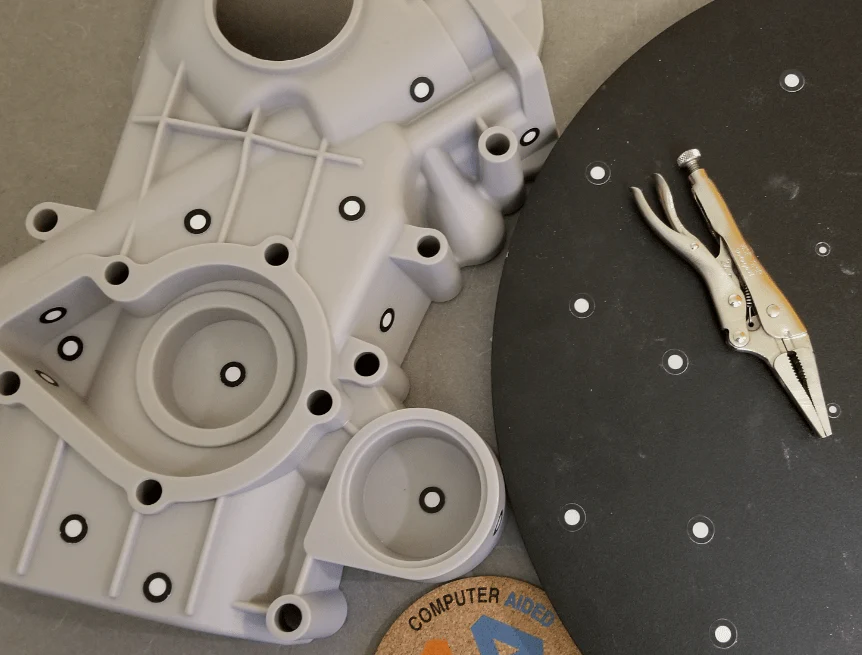
For high-precision, portable use, targets remain the best option with HandySCAN.


Comments